
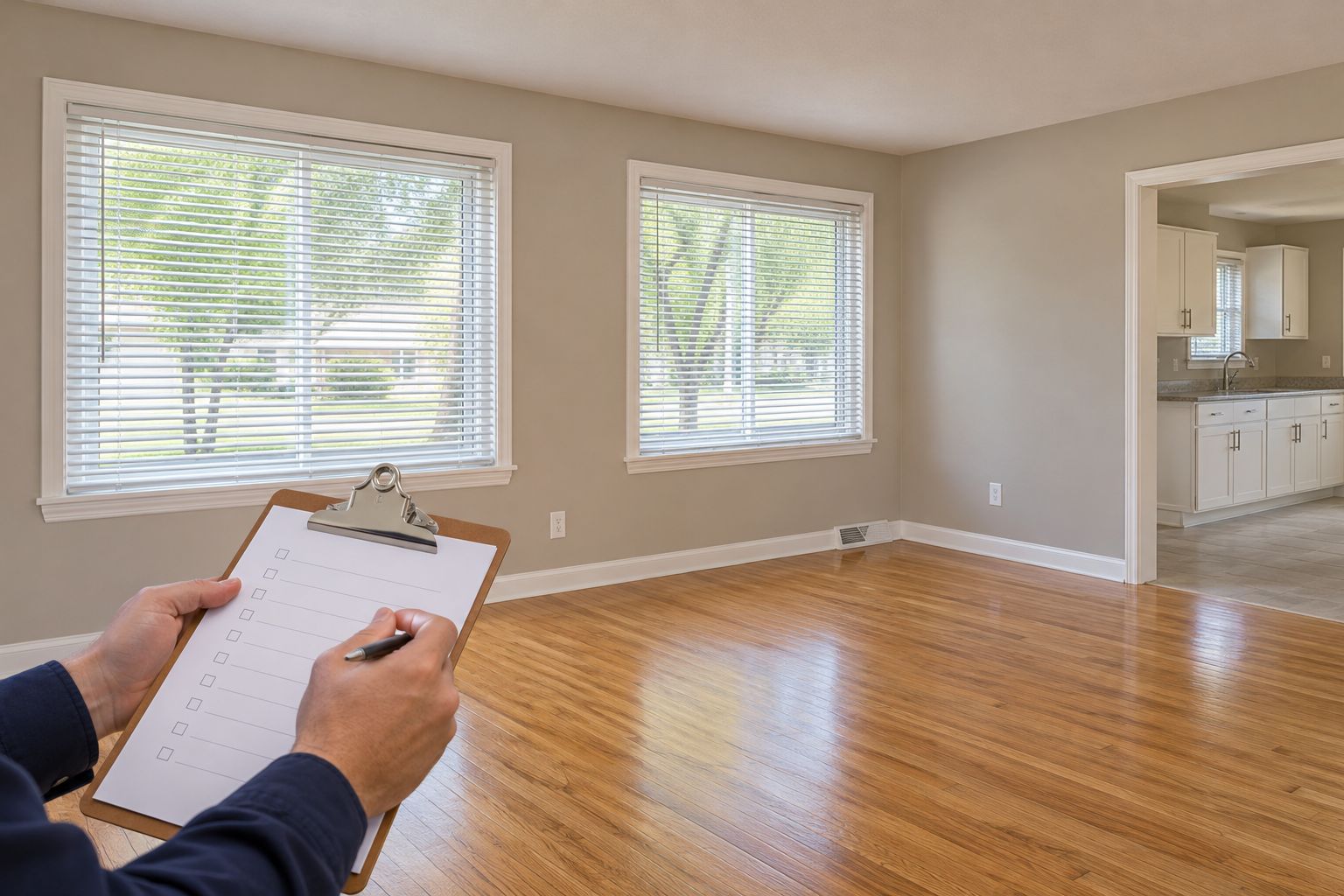
Most Quincy landlords think of the security deposit as their money until the tenant proves otherwise. Under Illinois security deposit law it works closer to the opposite. It's the tenant's money, you're holding it, and if you keep it the wrong way a judge can make you pay back twice what you took.
Here's what that actually costs you. Say you collected a $1,200 deposit, the tenant moved out and left the place dirty with a few holes in the walls, and you kept the whole thing without sending a list of what it went to. The tenant files in small claims. If the court finds you didn't send the itemized statement, or sent it in bad faith, and didn't return the deposit on time, you owe $2,400, plus court costs and the tenant's attorney fees. A cleaning bill just turned into a check you never planned on writing.
The rules aren't complicated. They're just strict about timing and paperwork, and that's where self-managing landlords around Quincy get tripped up.
What the Illinois security deposit law actually says
The rules are in the Security Deposit Return Act, 765 ILCS 710/1, last amended by Public Act 103-0224, which took effect January 1, 2024. Here's the order things have to happen in:
- The tenant moves out. Your clock starts on the day they vacate or the day their right of possession ends, whichever is later.
- Within 30 days, if you're keeping any of the deposit for damage, you send the tenant an itemized statement listing each item of damage and either what it cost or what you estimate it will cost to repair or replace. If the work is already done, attach the paid receipts or copies. If it isn't done yet, the estimate is fine for now.
- If you used estimates because the work wasn't done yet, you send the paid receipts within 30 days after you sent the statement.
- You deliver the statement in person, by postmarked mail to the tenant's last known address, or by email to a verified email address the tenant gave you.
- If you don't send an itemized statement in those 30 days, the full deposit goes back to the tenant within 45 days of move-out.
One thing that trips people up: a lot of older guides online say this law only covers buildings with 5 or more units. That used to be true, but Public Act 103-0224 took that limit out as of January 1, 2024. A single house in Quincy is covered the same as an apartment building, so if you've been going off the old rule, it's time to change how you handle deposits.
What you can and can't take out of the deposit
A deposit is there to cover two things: money the tenant owes you and damage they caused. That means unpaid rent, unpaid utilities the lease made them responsible for, and physical damage like broken blinds, holes in the walls, pet damage, junk left behind for you to haul off, and cleaning beyond what a normal move-out needs. It also shows the tenant had money up front, which by itself cuts down the risk of renting to someone who's stretched too thin.
What you can't charge for is the house getting older. The statute says lease charges for damage have to be for damage beyond normal wear and tear. Carpet that's worn down after six years, paint that's faded, and a few small nail holes from pictures are going to be a hard sell in front of a judge. If you'd have to do it between any two tenants, it's probably wear and tear.
How much can I charge for a deposit in Quincy?
Illinois doesn't cap security deposits, and Quincy doesn't have its own deposit ordinance the way Chicago does. You can set the amount, as long as it's in the lease.
Two other things are worth knowing. If you own 25 or more units in one building or a complex on contiguous parcels, the Security Deposit Interest Act, 765 ILCS 715, requires you to pay interest on deposits held more than six months.
And Illinois landlord law changes on January 1, 2027. A new section of the Landlord and Tenant Act, 765 ILCS 705/35 (from House Bill 3564), still allows deposits and doesn't cap them, but it caps application fees at $50 unless you can document a higher screening cost, and it requires any non-optional fees to be listed on the first page of the lease. If you write your own leases, that's one to get updated before the new year.
Selling the house? The deposit goes with it
We get this question quite a bit from owners selling a rental with a tenant in it. Under 765 ILCS 710/1.1, when you sell or transfer the property, the buyer becomes liable to the tenant for the deposit, and you stay jointly liable along with them. In plain terms, if the deposit doesn't get handed over at closing and the buyer never returns it, the tenant can come after you too. Make sure it's accounted for on the closing statement.
Here's how to keep it clean
None of this takes much time if you do it in order. Here's how it usually goes when it's done right:
- Before the tenant moves in, walk the place and take dated photos of every room, including floors, walls, blinds and appliances.
- Put a valid email address for the tenant in the lease so you have a verified way to deliver the statement later.
- On move-out day, get the keys back and take the same photos of the same rooms.
- Put the 30-day date on your calendar the day they leave, not the day you get around to looking at the place.
- Keep every receipt for repairs, cleaning, and junk removal, and match each one to a line on the statement.
- Send the statement and the remaining balance together, and keep a copy of what you sent and how.
When you send it, keep the message plain. Something like: "Here's the itemized list of what we deducted from your deposit and why, with the receipts attached. The remaining $[amount] is in the mail to the address you gave us." No arguing. The list and the receipts do the talking.
If you'd rather have this off your plate
If you're managing your own rentals and you've got this dialed in, keep doing it. You don't need us for that.
But after hundreds of leases around here, I can tell you the deposit is one of the places self-managing landlords most often get out of compliance with Illinois law without knowing it. It's usually not bad intent, it's a busy month where the 30 days slip by. We handle the move-in and move-out documentation, the itemized statement, the receipts, and the conversation with the tenant, so you don't have to.
If you've got a question about a deposit or want to talk through your rental, give us a call at (217) 592-9400 or request a free rental analysis for your Quincy property.